Japanese Quest Walkthrough

Japanese Quest Walkthrough

This is the new, definitive Japanese Quest Walkthrough. This replaces the older Japanese Quest Guide, which I thought was slightly confusing and didn’t order things so clearly.  This walkthrough should be of use to you regardless of what level you are.  Updates will appear in red, and all new posts will be added.  Posts may be shuffled around if I feel there is a better placement for them and time spans may be adjusted.  Quickly read over the guideposts and let the adventure begin.

******
* Guidepost 1: Worlds should be done in order, but posts within each world can and should often be done simultaneously with each other.
* Guidepost 2: Length of time provided is an average of how long completing the world may take you. Going slower or faster is up to you.
* Guidepost 3: In worlds that contain a time span and “Continuous,” the time span is how long you should spend in the world before moving onto the next, and “Continuous” means that you will continue with this world for the rest of your studies even once you’ve moved onto the next world.
* Guidepost 4: Anything involving Anki is always “Continuous,” as no matter what world you are on, you will always be reviewing what was added from a previous world.
******

World 1:  Are you sure you really want to learn Japanese?
(2-4 days)

Is Chinese more beneficial to learn than Japanese?
What is your motivation for learning Japanese?
How long will it take you to become fluent?
How many hours will you need to study a day to become fluent?
Is this a New Year’s resolution?
- Is it bad to learn Japanese solely for the anime and manga?

World 2:  What Japanese Level Up is all about.
(2-3 days)

Introduction to the Japanese Level Up method.
Introduction to the creator of this site, Adshap.
Turning your “study” into your “quest.”
- Japanese is your new game.
Keeping track of your progress by level.
- Test Your Japanese Might

World 3: How to use Japanese Level Up efficiently.
(2-3 days)

How to properly use the posts on this site (inspiration, motivation, and guidance power-ups).
Do not get caught up in asking why.
- Always be developing your own strategy guide.
Do not learn a 3rd language while learning Japanese.
Decide very carefully whether you will blog about your Japanese experience.
- Don’t spend too much time developing your writing skill (except in the beginning with RTK and Anki) unless it is an important goal personally to you, since it is the least important ability with limited returns.
Quit Japanese for a period of time and trying to restart?
- Follow your fellow adventurers, who are experiencing and discussing exactly what you are going through at this current moment.

World 4: Preparing your first equipment.
(2-4 days)

- Purchase Genki 1Genki 2 or another popular beginner textbook (online or print) that covers basic grammar, vocabulary, and pronunciation.
- Purchase “Remembering The Kanji 1 (RTK)” and “Remembering The Kana.”
Download Anki, the ultimate online flash card program.
Download the Japanese Level Up Mod Anki Deck.
Set up your language setting on your computer so you can input Japanese characters with your keyboard.
Decide if you want to take Japanese classes in addition to self-study.
Decide if you should major in Japanese in college.
Make sure you are getting enough sleep.
Set yourself up to prevent eye fatigue.

World 5: Mounting your first attack.
(2-4 months)

- Understand how to set up and use Anki by reading both the user manual and watching the introduction videos.
Decide whether you will use a pre-made Anki deck or create your own.
- Boost Anki’s power with media enhancements: intro, audio, graphics, colorful kanji stroke order diagrams, and srs subs.
Learn how to write and pronounce the kana (the first 2 Japanese alphabets) using Anki and “Remembering The Kana”.
Master the the first 950 of 1901 kanji (the third Japanese alphabet) using the RTK mod and Anki. If you don’t want to use my RTK mod deck and want to use the standard RTK 1 + 3 deck that is provided in Anki shared decks, make sure to delete the unnecessary kanji.
- Self-enter and review 500 Japanese-English sentences that you take from your purchased beginner textbooks into Anki.

World 6: Setting up and engaging in your immersion environment.
(2-5 days, Continuous)

- Convert everything you do in English to Japanese, creating a need for Japanese.
Understand how you will utilize the incredible power of passive studying.
- Create your Immersion Ipod (or other mp3 player), and upload the audio only.  You can download video with a program like this and convert from video to mp3 with a program like this or this.
Clean up the unnecessary parts of what you upload to your Ipod.
- Watch and then upload the audio to your Ipod: J-dramasanime, movies, variety shows, comedy, video game walk-throughsnewsAmerican movie dubs, and music.
Never use English subtitles.
Try keeping your immersion pure, banishing any English.
Learn the 5-minute rule when watching media.
- Make full use of Japanese Netflix, Japanese iTunes, the Japanese Level Up Amazon store, and other video websites.
- Preparing your Japanese video game equipment.

World 7: Delivering your second attack.
(2-4 months)

- Finish mastering the remaining 951 of 1901 kanji using the RTK mod and Anki (or remaining RTK 1+3 if using the standard deck, and continue deleting the unnecessary kanji).
- Self-enter and review 500 more Japanese-English sentences that you take from your purchased beginner textbooks into Anki, giving you a grand total of 1000.

World 8: Frustration, setbacks, boredom, discouragement, and low points.
(2-5 days)

Understand and come to terms with the 4 phases of language shock.
How your Japanese ability will actually progress.
Japanese is not impossible to learn.
How to fight boredom.
How studying makes studying more enjoyable.
Learning Japanese is harder than learning English.
Start visualizing your Japanese-speaking future self.
- Japanese is improving your life in ways you never imagined.
- Why is Japanese taking you so long to learn?

World 9: Taking the Japanese-only plunge.
(1-3 months, Continuous)

Switch from creating Japanese-English (J-E) cards to Japanese-Japanese (J-J) cards only using Anki and continue adding J-J cards to your heart’s content. (Check out the level guide to see around how many J-J cards you need to reach what level of Japanese.)
Acquire use of the branching process when doing J-J cards in Anki.
Discover the only J-J dictionary you will ever need.
Make the very difficult switch from the J-E dictionary to the J-J dictionary (read parts 1-4)
Utilize the most common Japanese words found in the J-J dictionary (read parts 1-3)
Use pictures to aid you in tough J-J definitions.
Keep in mind the minor exceptions where you can still use English.
- Techniques for easier J-J branching part 1 and part 2.

World 10:  Enter the reading.
(1-2 months, Continuous)

Buy and read Japanese novels, manga, magazines, websites and whatever else you can get your hands on.  Try the following bookstores: KinokuniyaYesAsiaAmazon Japan or Bookoff)
- Consider giving yourself a reading handicap.
Keep yourself updated with great news sites translated into Japanese.
Only read what is appropriate to your interests.
- Understand the difference between extensive and intensive reading.
Skip parts you don’t understand.
Avoid Japanese study in disguise (the in-about ratio).
- Video games: powerhouse of written material.

World 11: Let the conversations begin.
(2-3 weeks, Continuous)

Register a Mixi account (like the Japanese version of Facebook) and avoid “language exchanges.”
Make friends on Mixi and talk with them on Skype.
- Engage in Japanese Twitcasting (live streaming community sites).
Prove yourself quickly in any conversation.
Keep in mind some of the confusing things Japanese people will say to you.
React properly to the difference of between not understanding versus not hearing.
Get used to the background noise you will have to deal with while talking.
Converse with yourself by developing your own inner monologue.
Don’t discuss your study methods with others.
Japanese speaking mastery: the never ending struggle
- Getting used to the formal language

World 12: Lack of motivation and confidence, burnout, and self-doubt.
(2-5 days)

- Overcoming the Mid-level Blues: Part 1 and Part 2.
- Get rid of frustration towards kanji?
- The Japanese fluent illusion: everyone doesn’t sound as good as you think.
Don’t be jealous of Japanese babies.
- Don’t worry about your Japanese becoming too masculine/feminine.
Your need for Anki will slowly fade away.
You will become your own most valuable teacher.
Your skills will be unbalanced, and that is okay.
- Experiencing the Japanese Random Level Down.
- Enter motivating Japanese reading contests and video contests to push your competitive self forward.

World 13: Techniques to make your speaking sound more natural.
(2-5 days)

Stop raising the second syllable.
Develop your inner actor.
Slow down; you are the one talking too fast.
“Ru”, the magical verbifier.
How to clarify kanji in Japanese.
Buy time with politeness.
The art of the multi-take.
Use the English found in Japanese.
- Fully enjoy the abbreviation madness.

World 14: Getting your dream job using Japanese.
(2-4 days)

Consider teaching English in Japan as a entry gate (read parts 1-3).
Is taking the Japanese Language Proficiency Test (JLPT) necessary?
Qualifying yourself for a job.

World 15: From student to master
(Continuous)

- Be of guidance to others who are just beginning.  Respond to their comments on posts on this site with sage advice, and reveal some of the best examples of your Anki deck.
Real masters don’t show off abilities.
- Don’t fall prey to the desire to trade in your culture.
- Join the Japanese Level Up Alliance (Write for us!)

Final Words:

Never give up.  You can and will do this.  This is your quest. Make it a memorable one.

_________________________
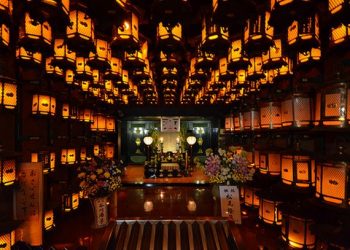
Photo by: Tanaka Juuyoh

Bookmark the permalink.

7 Responses to Japanese Quest Walkthrough

  1. Sky says:

    Woah

    This is insane, really, GREAT JOB!

    Gives me a real motivational boost!

  2. Arthur says:

    Great job on reorganization! I was thinking having a ‘Starter Guide’ that contains a 50 point list was a bit stretching it…

    The whole concept of ‘worlds’ that you stay in until for a certain period of time is a nice one. Helps to cement the concept that there isn’t a ‘right’ order for doing all this stuff.

    Interesting call to place immersion after the 500 sentence mark.

  3. カイエン says:

    Looking at this timeline… a comment on another post got me thinking… are you an auditory learner?

    I started reading manga (and SRSing it alongside textbook sentences) when I had a little under 500 sentences and started listening to subtitle-less Japanese a little past 1000 sentences. And while it’s partly because I haven’t spent enough time doing it, I’m not gaining much from the listening (don’t worry, I’m not going to completely drop it.)

    It occurred to me that the main differences between what you recommend and what I am finding works well for me could be explained by the fact that I am an extremely visual learner.

    • どうして says:

      I found that first watching something with Japanese subtitles (not English subtitles of course) and then continuing to listen to it afterward has really helped me with my listening. Having an idea of what they were saying in the first place helps me recognize things I would likely otherwise miss. As for finding Japanese subtitles… it can be fairly difficult sometimes.

      • カイエン says:

        Good idea. I’ll try that.

        The other thing I’m thinking of doing is that next manga series I read will be something that has been made into an animé, which I’ll watch after reading.

    • adshap says:

      I wouldn’t call myself an auditory learner. However, I strongly believe in the power of listening (something I originally didn’t do much of in my first year of study). I’m writing a post soon that will touch on this topic about about listening immersion and when it finally starts to have its massive positive effects.

Leave a Reply

Your email address will not be published. Required fields are marked *

*

You may use these HTML tags and attributes: <a href="" title=""> <abbr title=""> <acronym title=""> <b> <blockquote cite=""> <cite> <code> <del datetime=""> <em> <i> <q cite=""> <strike> <strong>